How to Choose a Tattoo Artist
There are usually two ways people find a tattoo artist. Sometimes you see a tattoo on Instagram, like it immediately, open the artist’s page, and start thinking about booking. Other times, you already know what kind of tattoo you want, so you search for ornamental tattooing, realism, blackwork, Japanese tattooing, or another style.
In both cases, finding an artist is only the first step.
Before contacting them, take some time to look through the whole portfolio. One beautiful photograph may catch your attention, but it cannot tell you everything about the person who made it.
You are not simply choosing a picture you like. You are choosing the artist who will make hundreds of permanent visual decisions on your behalf: the size, placement, proportions, lines, contrast, details, and the way the tattoo works with your body.
There are three things I believe you should look at before booking: style, technical quality, and visual signature.
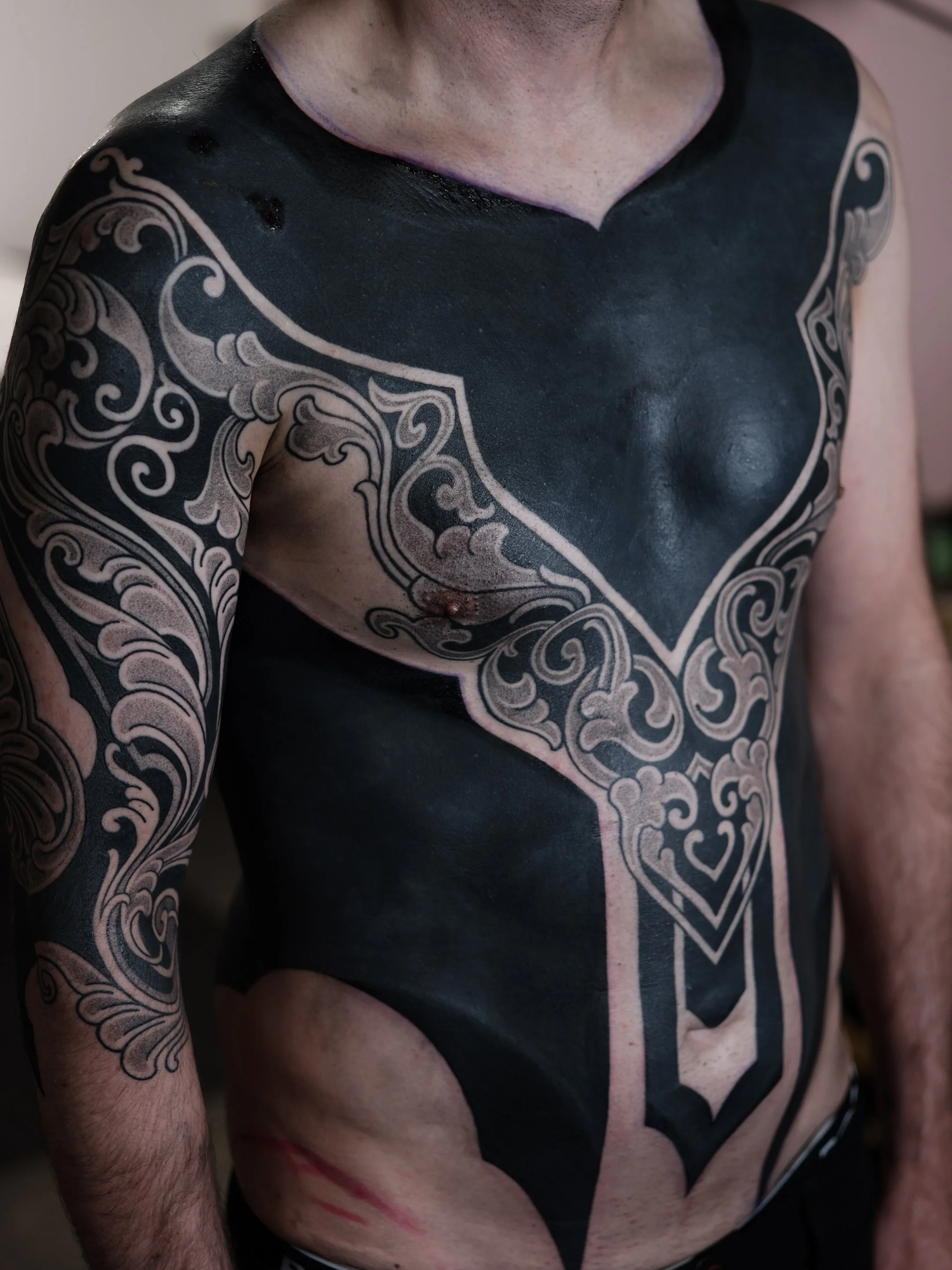
Style
Style is the simplest place to begin. It tells you the general direction in which an artist works: realism, traditional, Japanese, blackwork, lettering, ornamental tattooing, tribal, and so on.
But a style name is only a broad category. Most styles contain many smaller directions.
Ornamental tattooing, for example, may include sacred geometry, floral compositions, tribal work, Mehndi-inspired patterns, architectural ornaments, or large blackwork designs. These may all be described as ornamental, but they can look completely different and require different experience.
The same is true in realism. Some artists mainly create portraits, while others specialise in animals, statues, dark imagery, or small micro-realistic pieces. A person can be excellent within one of these directions without being the right artist for every other kind of realism.
Think about doctors. A heart surgeon and an orthopaedic surgeon are both highly trained doctors, but they have spent their careers solving different problems. If you needed heart surgery, you would naturally choose the person who regularly works with hearts.
Tattooing is similar. Being a good tattoo artist does not automatically mean being equally good at every kind of tattoo. Specialisation creates a deeper understanding of a particular type of work.
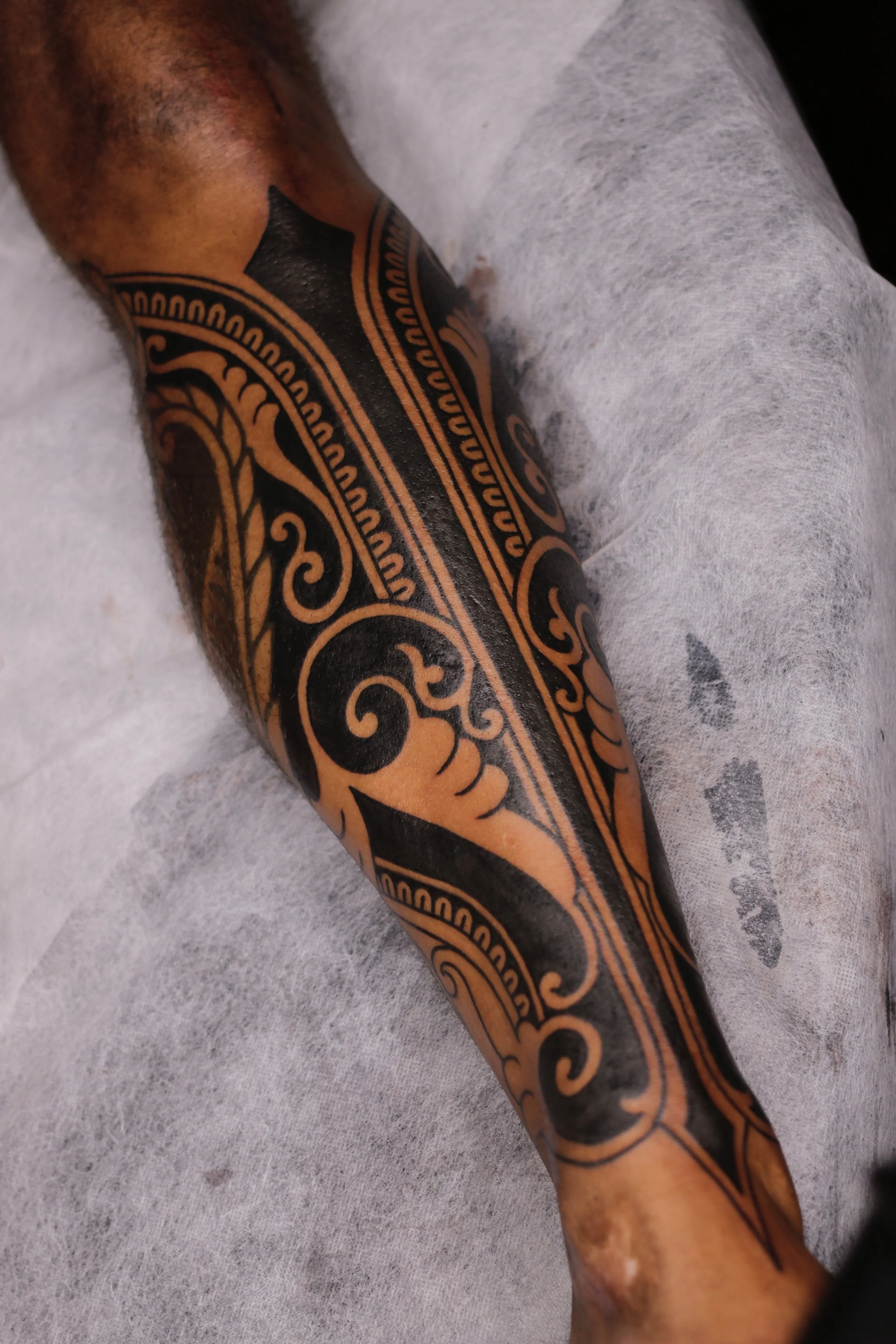
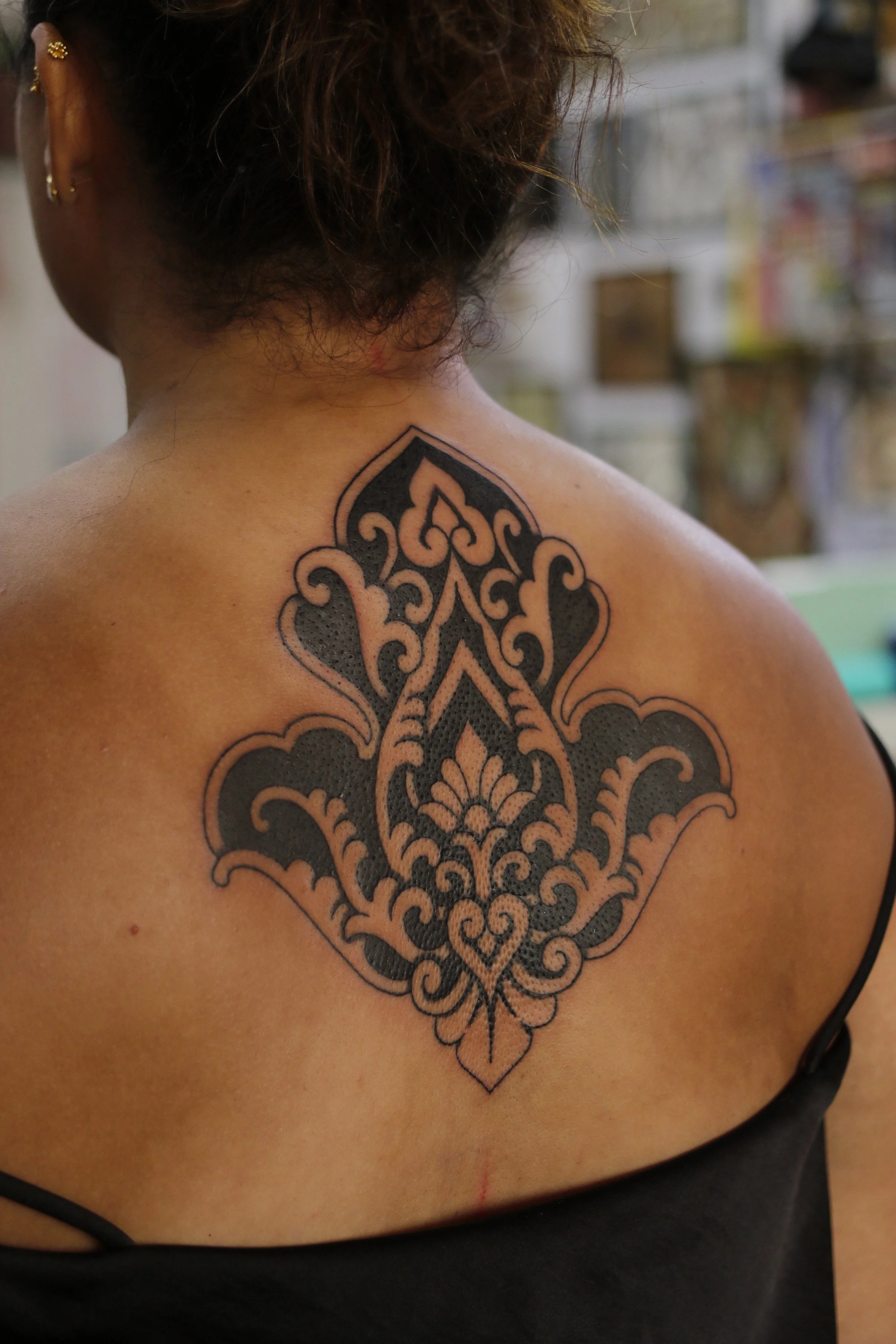
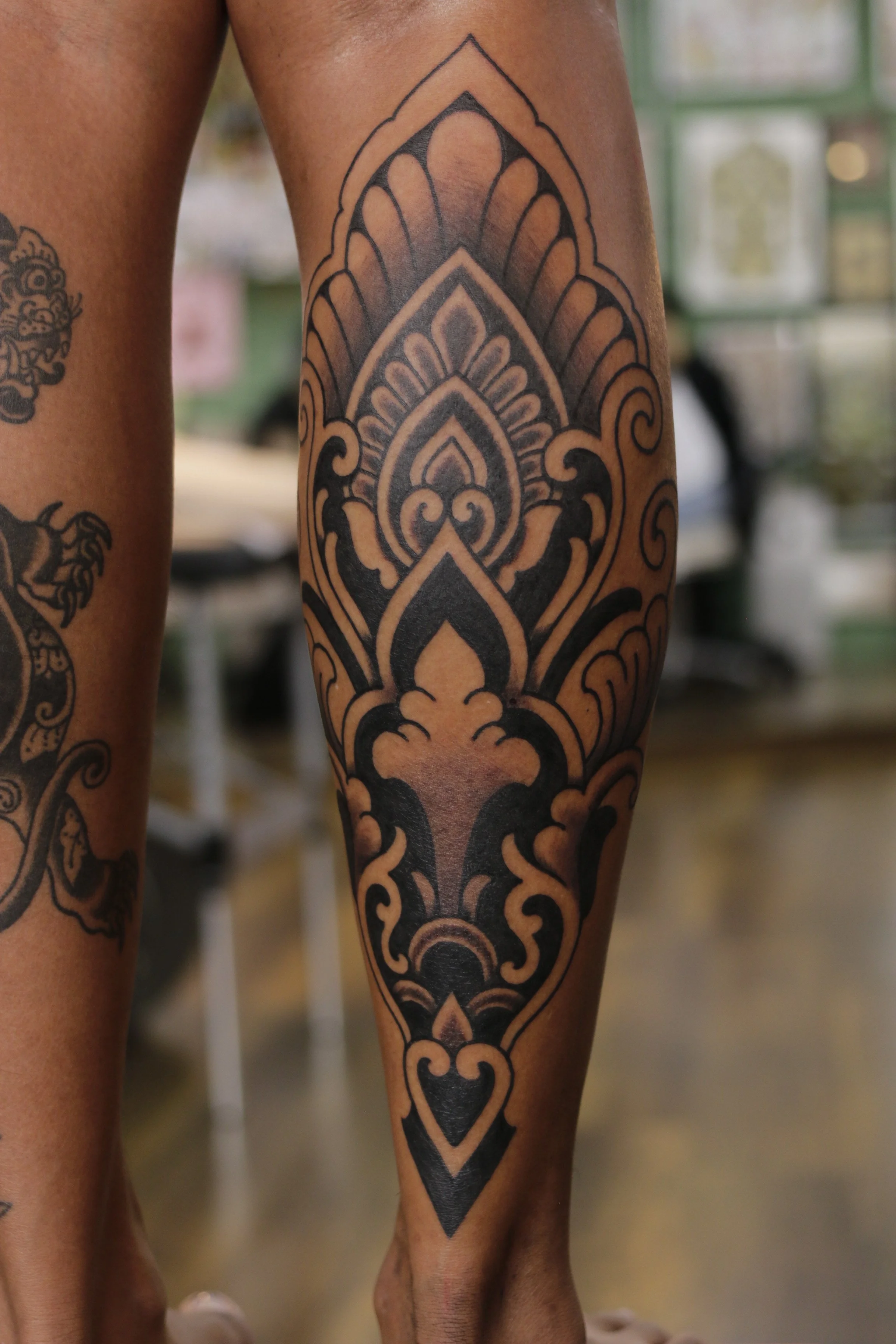
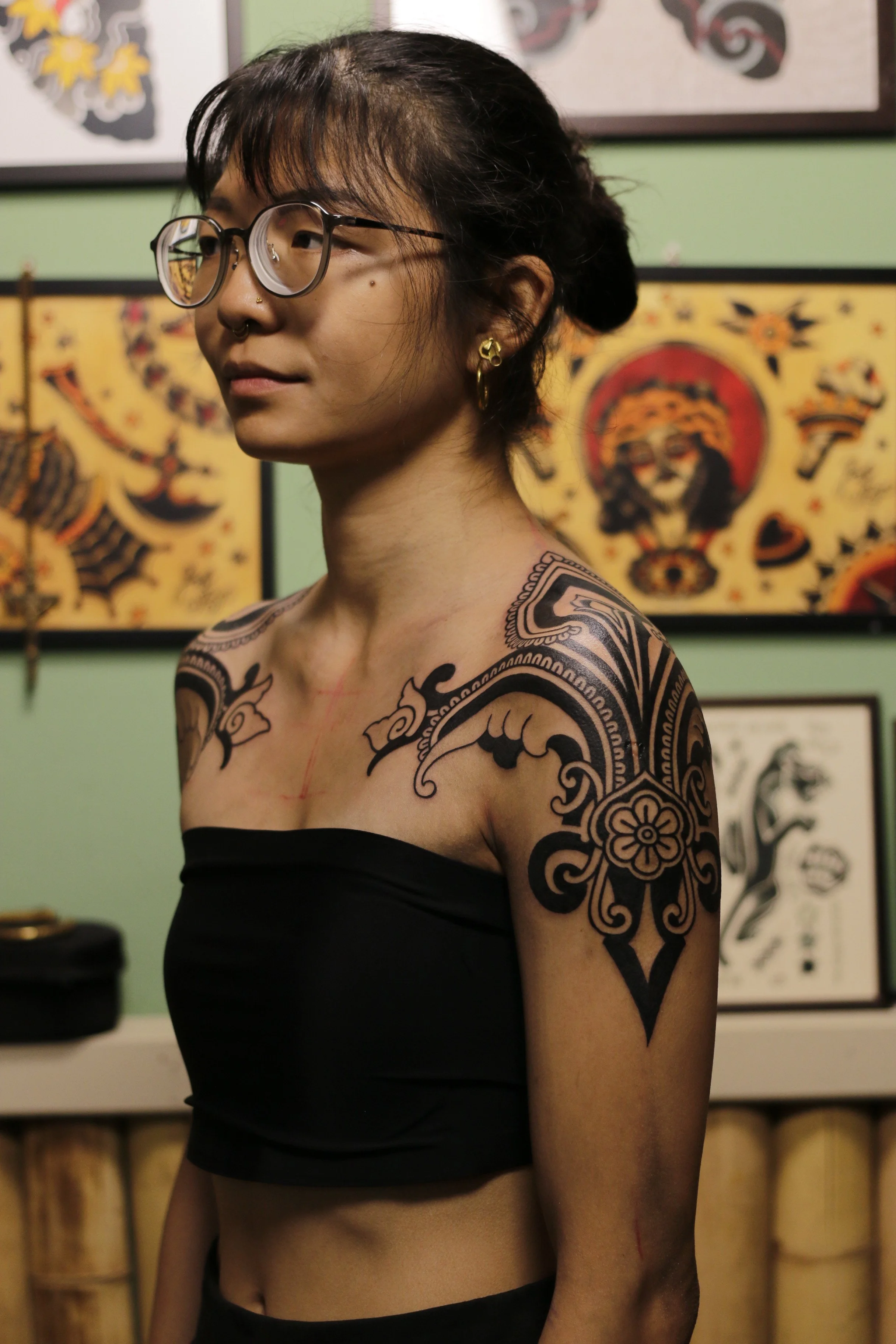
What to look for
First, check whether the work you want is a regular part of the artist’s portfolio.
Then look more closely at the substyle. Do not choose someone simply because they use the same broad label you searched for. An artist who mainly creates sacred geometry may not be the right person for a large floral backpiece. An excellent portrait artist may not be the right choice for a full ornamental sleeve.
Look for several relevant tattoos, not one unusual example hidden among completely different work. Ideally, find projects of a similar size and on a similar part of the body.
Technical Quality
A tattoo does not live inside an Instagram square. It lives on a body.
The body moves, bends, turns, gains weight, loses weight, and changes with age. A tattoo should work with its shape rather than simply sit on the skin like a sticker.
This is why placement and size are part of technical quality.
Even a small tattoo should be positioned with some thought. It should not disappear in the middle of a large empty area, look too small for the body part, or make it difficult to continue the composition later. A good artist considers how the tattoo looks from a distance, how it relates to the body, and how it may work with other tattoos in the future.
A tattoo should not only look good in a photograph. It should still make sense when the camera is gone.
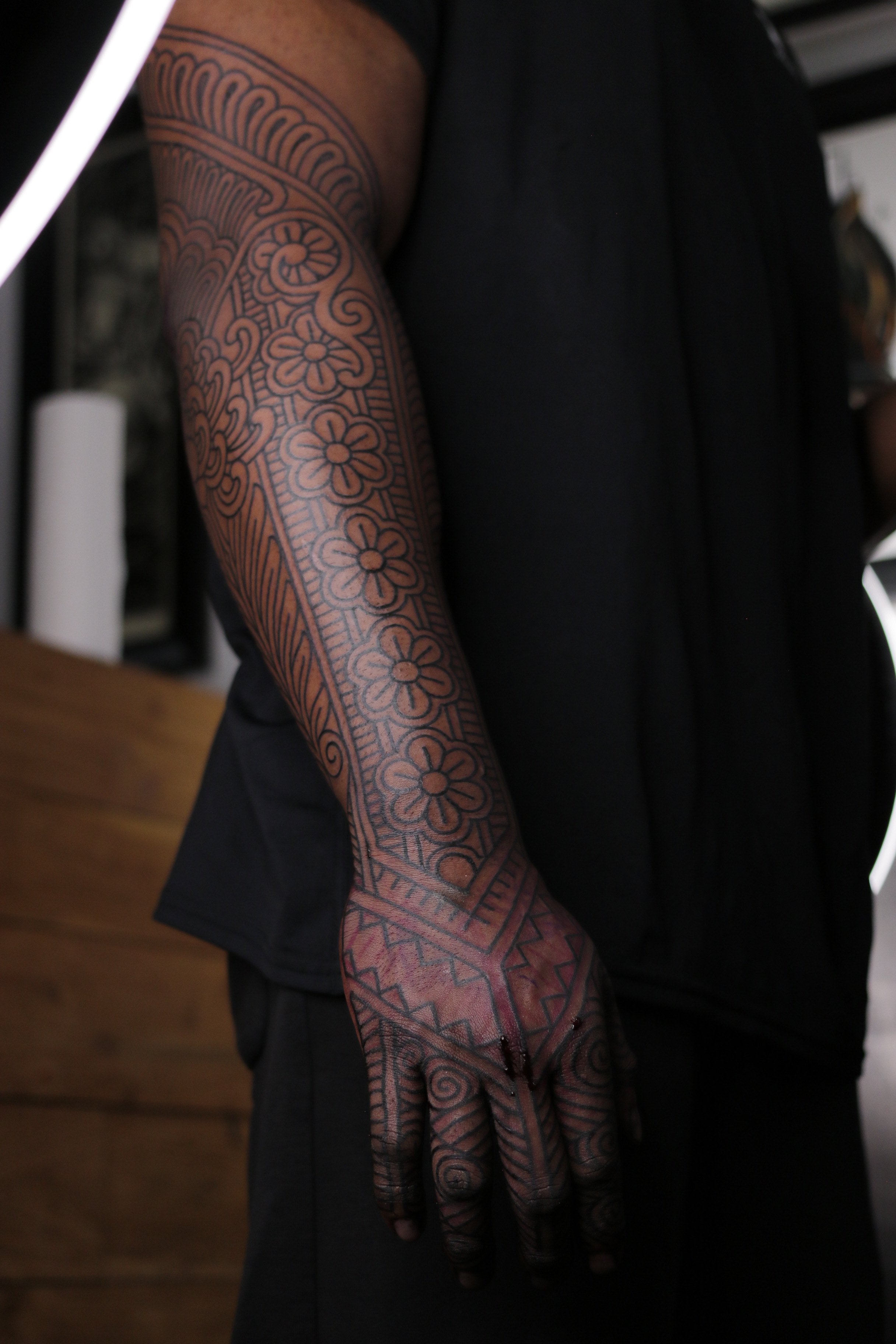
The closer technical details matter as well. Lines should be clean and consistent. Straight lines should look straight. Curves should move smoothly rather than shake or suddenly change direction. Shading should have a clear purpose, and solid black areas should look even rather than pale or patchy.
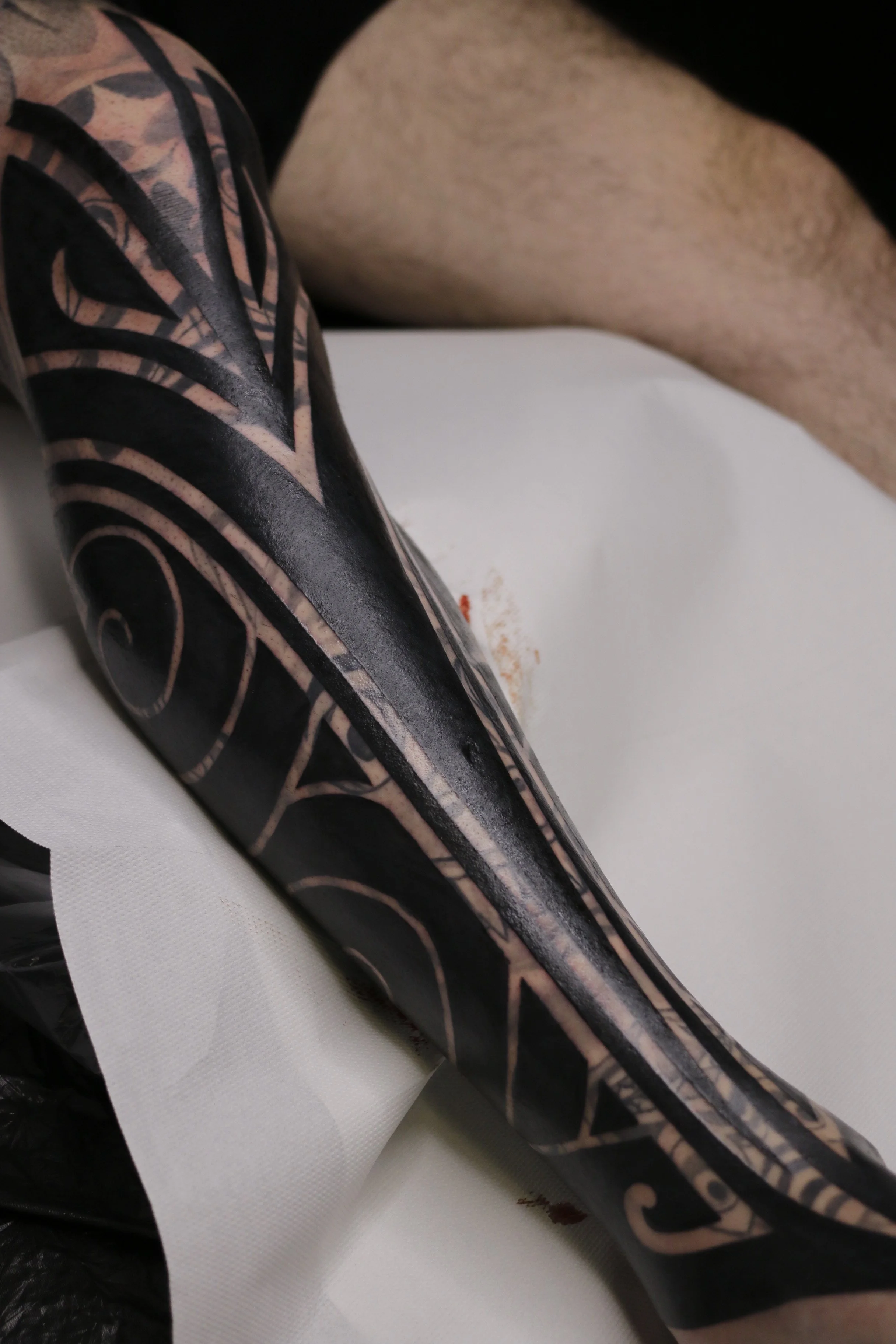
Contrast is especially important. A tattoo needs enough difference between black, grey, and open skin for the design to remain readable. A photograph may contain a great deal of detail, but if everything has the same visual weight, the tattoo can lose its structure once you step back.
What to look for
Check three things.
Body placement
Look for photographs where you can see the entire tattoo and the body around it. Does the tattoo follow the natural shape of the body? Is its size right for the area? Does it sit well beside other tattoos? Does the composition still look clear from a distance?
Do not judge a large tattoo only from cropped detail shots. A close-up can show a beautiful ornament while hiding the fact that the complete composition does not work on the body.
Close-ups
Look at the actual technical quality. Are the lines clean and consistent? Are straight lines actually straight? Is the shading smooth and logical? Is the contrast strong? Do the black areas look solid?
Also pay attention to how the work is photographed. If every image is dark, blurred, heavily edited, or shown only from one flattering angle, it becomes difficult to judge the tattoo itself.
Healed work
Always look for healed tattoos.
A fresh tattoo can look very impressive. The skin is swollen and glossy, the black appears darker, and good lighting can hide many small problems. But this is not how the tattoo will look once the skin has settled.
A fresh tattoo is a photograph of the process. A healed tattoo is a photograph of the result.
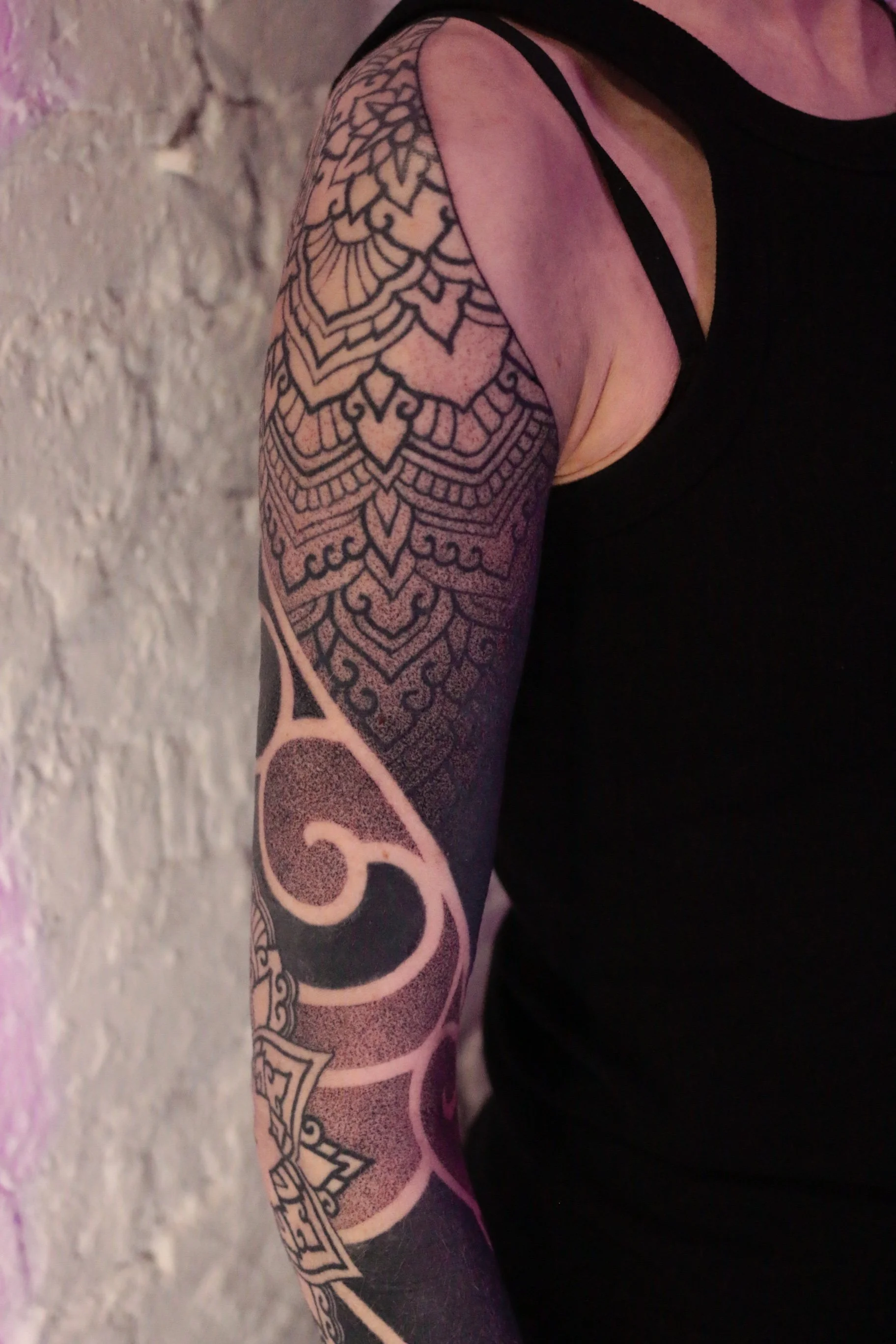
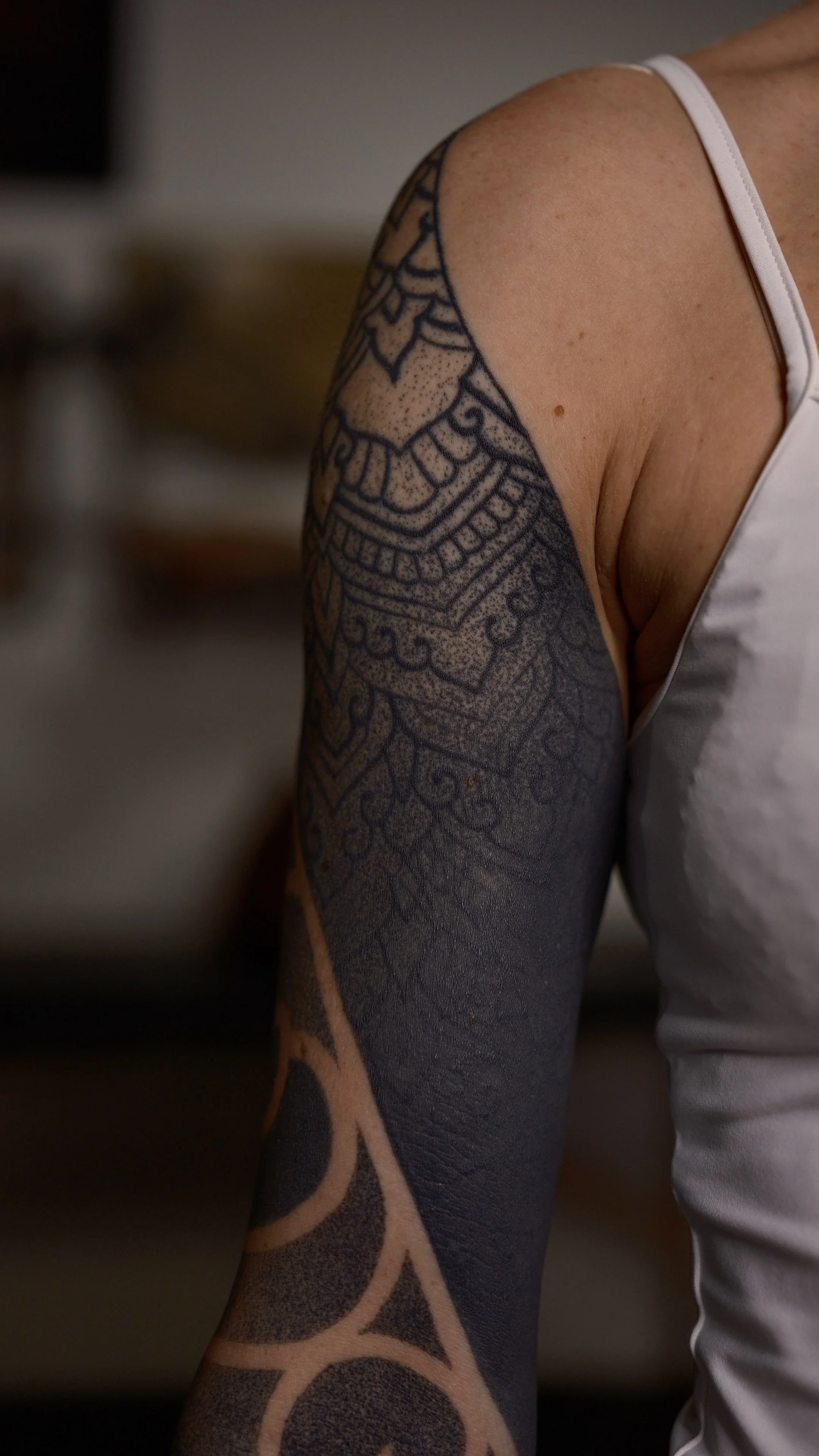
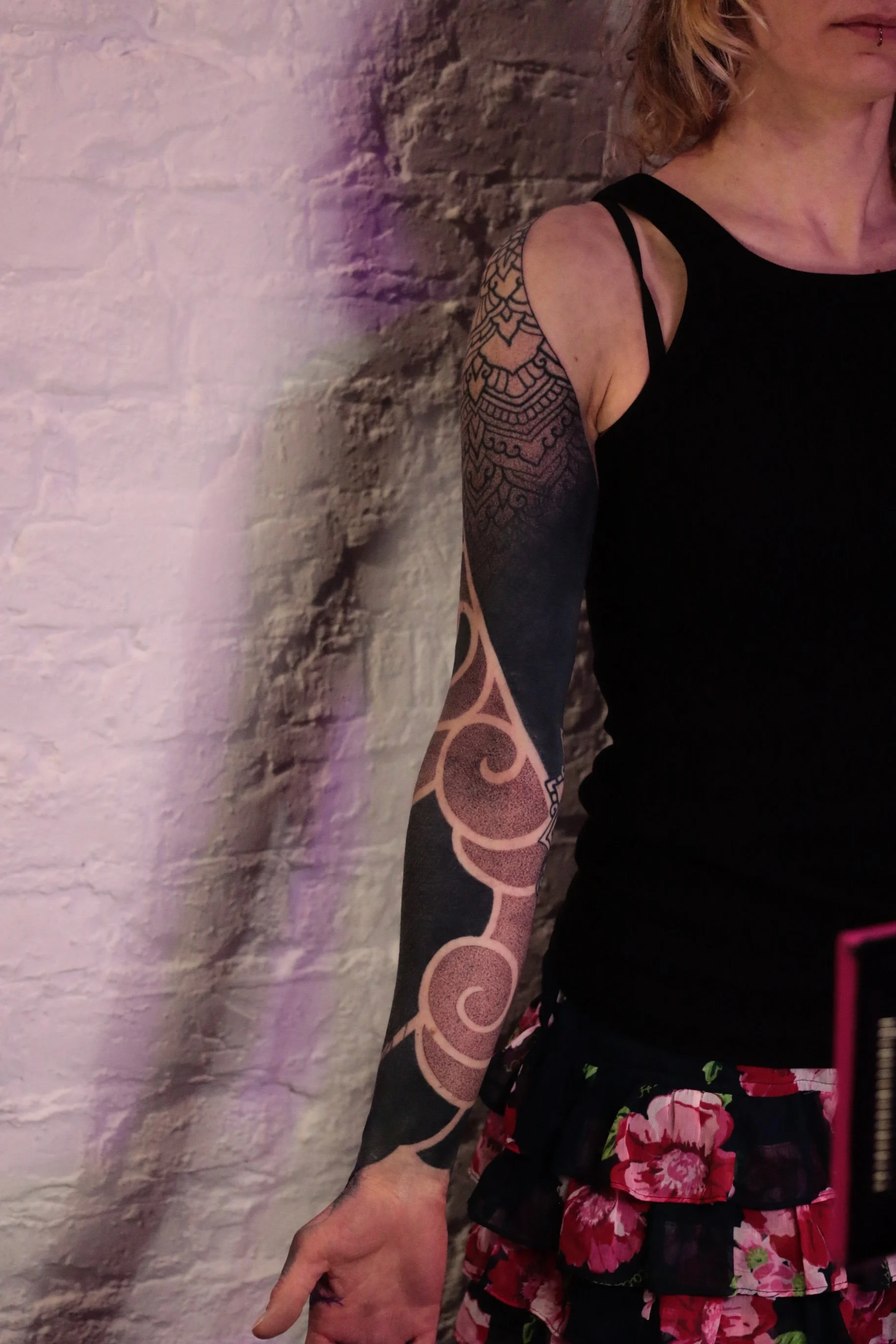
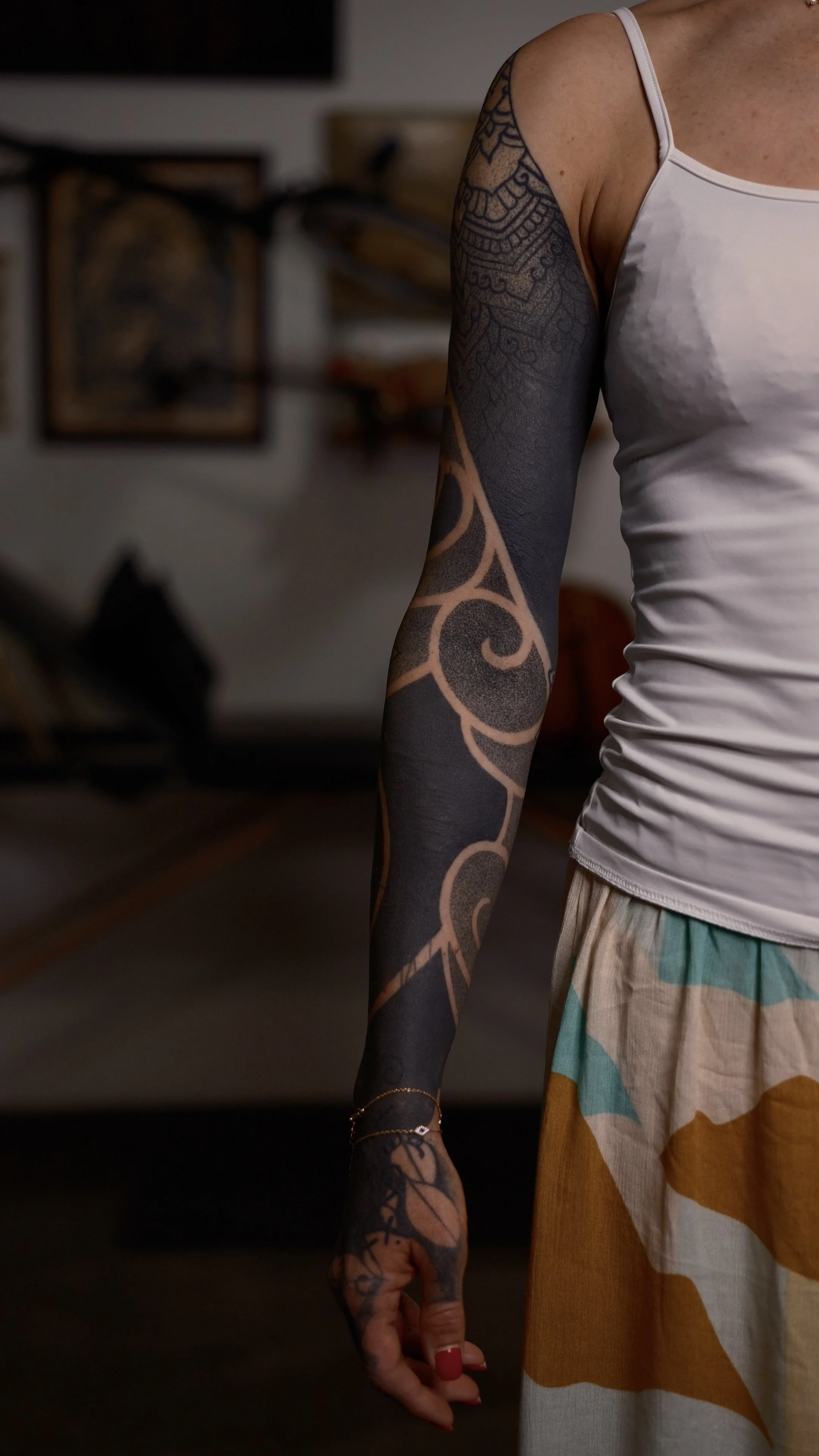
The client will not live with the tattoo as it looked during the first five minutes after the session. They will live with what remains after it has fully healed.
If an artist has no healed work in their portfolio, ask to see some before booking.
Today, a lot of visual work is created with social media in mind. It needs to look impressive in a photograph and attract attention quickly. But a tattoo is not content made for one day. It is something another person will carry for years.
Visual Signature
Visual signature is not the same thing as style.
Style is the general category. Visual signature is what makes one artist’s work different from the work of many other artists within that category.
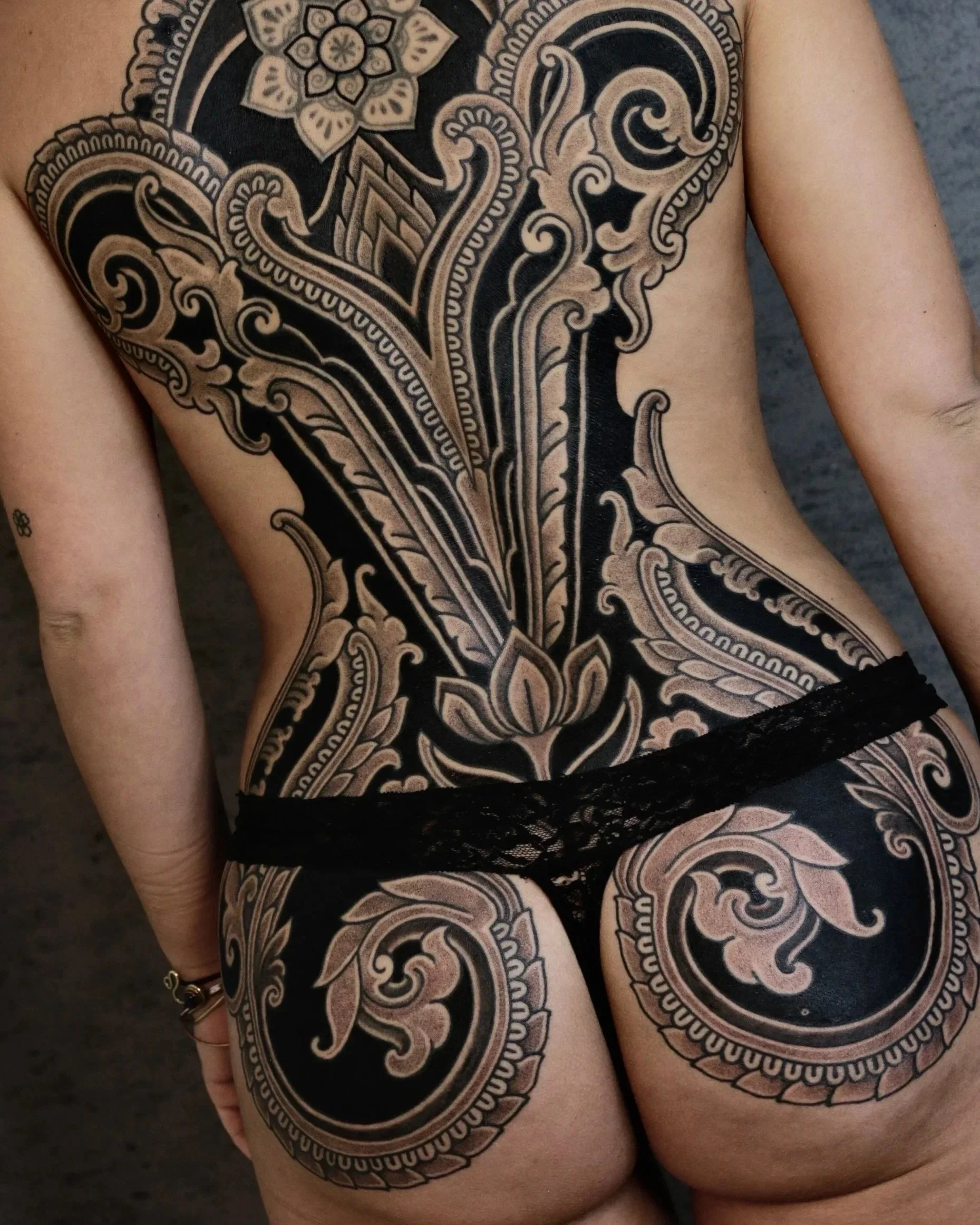
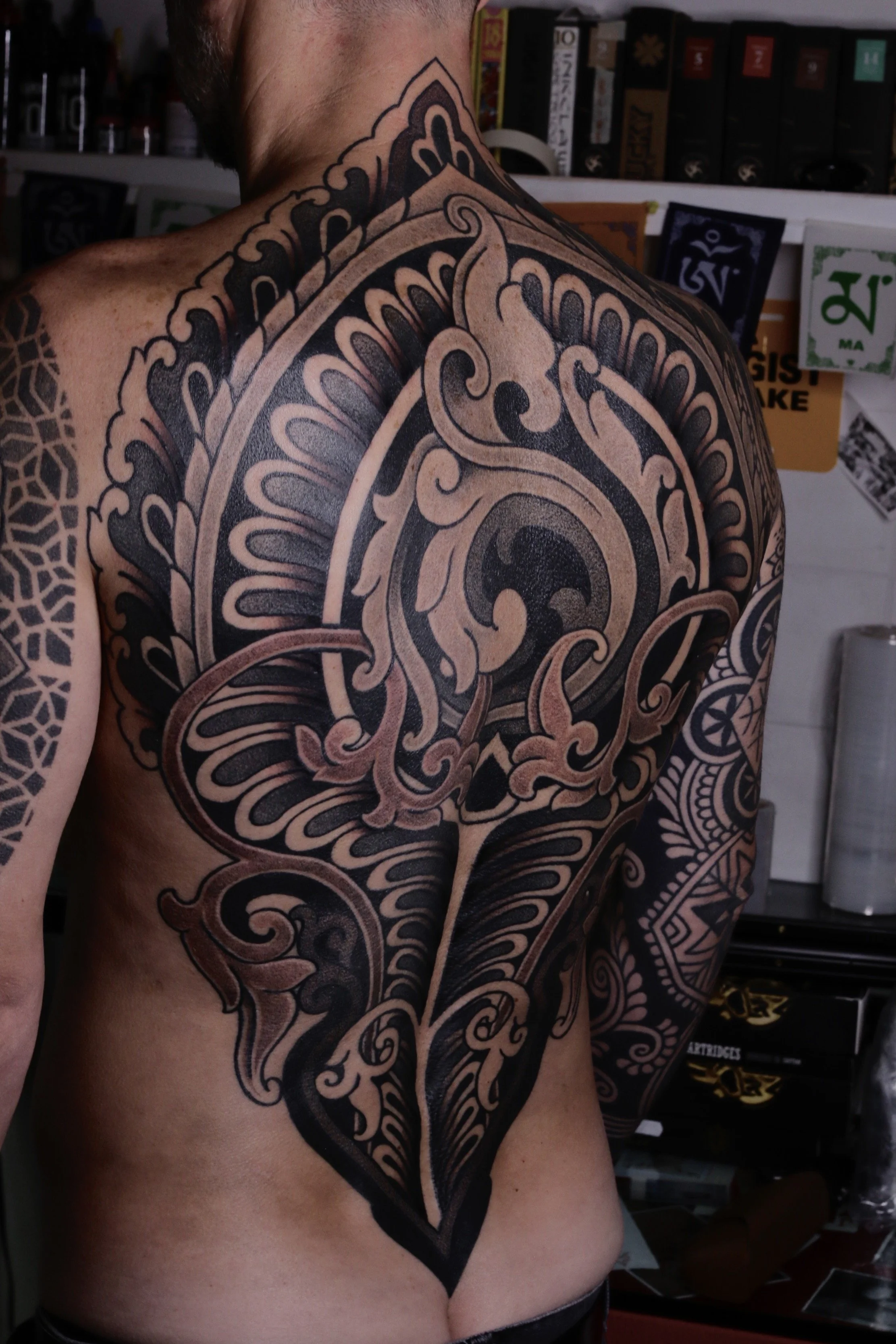
Two artists may both create ornamental blackwork. They may use similar references and possess similar technical skills, but their tattoos can still feel completely different.
One artist may prefer heavy black areas and bold shapes. Another may leave more open skin. One may use thick lines and simple compositions, while another builds detailed designs with smaller elements and tighter spacing.
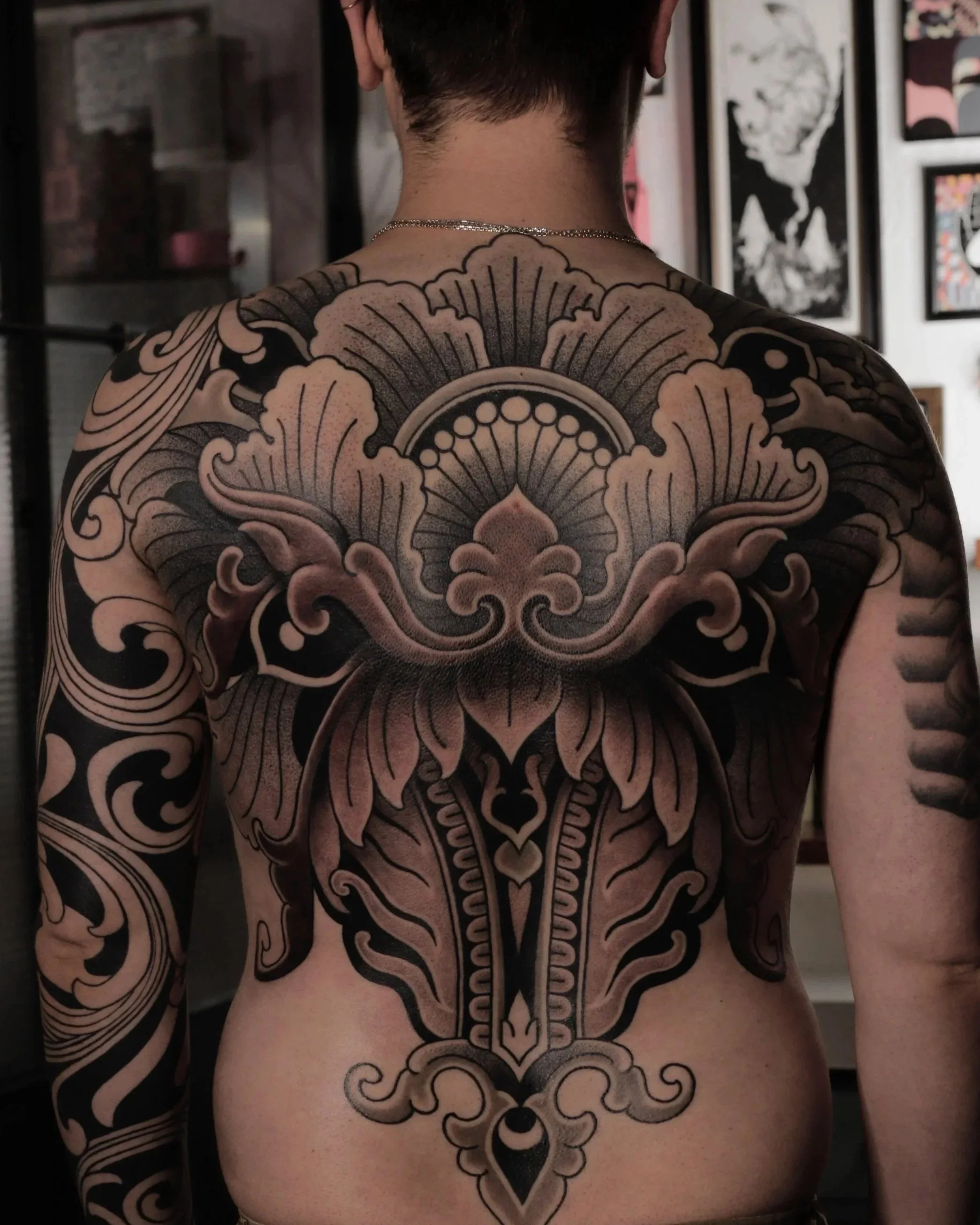
These decisions appear repeatedly throughout an artist’s work. Sometimes the signature is immediately recognisable: a particular kind of ornament, shape, rhythm, or composition. Sometimes it is quieter and appears in the thickness of the lines, the amount of space between them, the balance between black and open skin, or the way the design moves around the body.
Style tells you what kind of work you are looking at. Visual signature tells you whose work it is.
This is the part that says something about the artist as a person. It shows what they notice, what they find beautiful, and which decisions they make naturally.
Technique can be learned and a style can be studied, but a visual signature develops slowly through years of work, mistakes, corrections, and repeated choices.
What to look for
Do not judge an artist from one or two favourite photographs. Look at the portfolio as one complete body of work and notice what appears repeatedly.
Do you like the way the artist uses black? Do you like their line weight, spacing, proportions, and choice of shapes? Do you like how much detail they add? Do you like the way their tattoos move around the body?
Most importantly, can you recognise something that belongs specifically to this artist?
You do not need to request a copy of anything in their portfolio. But you should genuinely like the choices they make again and again, because those same instincts will shape your tattoo.
Before You Contact the Artist
Check three things:
Style: Does the artist regularly create the style and substyle you want?
Technical quality: Does the work fit the body, look clean in close-ups, and remain strong after healing?
Visual signature: Do you genuinely like what makes this artist’s work different from others in the same style?
When all three feel right, you are no longer contacting a random tattoo artist who happens to work in the correct category. You are contacting someone because you understand their work and want their particular experience, taste, and way of seeing.
You are not choosing an existing picture. You are choosing the person who will decide how your tattoo should look for the rest of your life.